


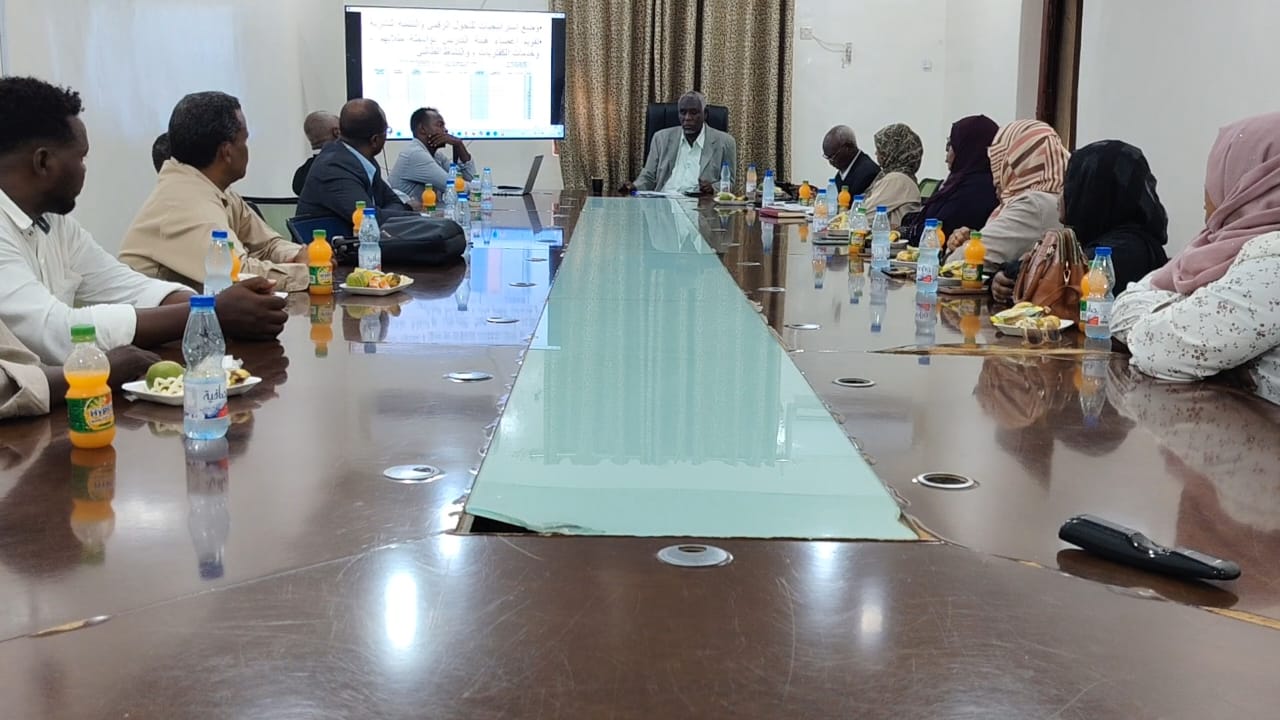
The Higher Council for Quality at White Nile University approved the performance report for the first half of 2026 for the Deanship of Quality, Assessment, and Accreditation during its first session, held this afternoon at the university headquarters in Kosti. The meeting was chaired by Dr. Qamar Al-Dawla Abdul-Muttalib Ahmed, Vice President of the University, in the presence of Professor Mohamed Al-Amin Mohamed Yousif Kibr, Dean of Quality, Assessment, and Accreditation, Dr. Bishara Issa Hamad, Secretary of Academic Affairs, and several council members.
Professor Mohamed Al-Amin Kibr presented the performance report for the first half of 2026, which highlighted the Deanship’s performance across various pillars during the first six months of the year. Characterized by clarity and transparency, the report revealed an execution rate exceeding 98% of the Deanship’s targeted goals for the mentioned period.
He also delivered a detailed report outlining positive indicators that reflect the university's commitment to implementing quality standards, directly impacting its overall performance. Key highlights included the stability and continuity of the educational process, alongside noticeable progress in digital transformation following the decree to establish the Deanship of Digital Transformation and define its responsibilities to drive digital initiatives across the institution.
Furthermore, the report highlighted achievements in scientific research and academic publishing, notably the White Nile Journal for Scientific Research securing an impact factor of 1.6—outperforming several scientific journals at other universities. It also detailed ongoing efforts to train and upskill university staff, boosting their professional and academic capabilities.
Dr. Qamar Al-Dawla Abdul-Muttalib Ahmed affirmed that training remains one of the fundamental pillars supporting educational and service institutions, noting that the university has prioritized this area by allocating a dedicated training budget within its general budget. He added that the university sent several personnel for international training to acquire essential expertise and skills, while also focusing on internal training courses and workshops to enhance performance efficiency and work quality, ultimately benefiting the educational process.